Stripers
Jump aboard for a family friendly fishing charter experience of a lifetime.
- Welcome to our page on Striped Bass!
- Overview
- The striped bass is native to the United States and Canada, ranging from the St. Lawrence River in Canada to Northern Florida, and parts of the Gulf of Mexico. This species has been cherished in Massachusetts since colonial times and is crucial for both recreational and commercial fishing today. The Massachusetts Division of Marine Fisheries conducts extensive research to ensure sustainable management of this important species.
- Appearance
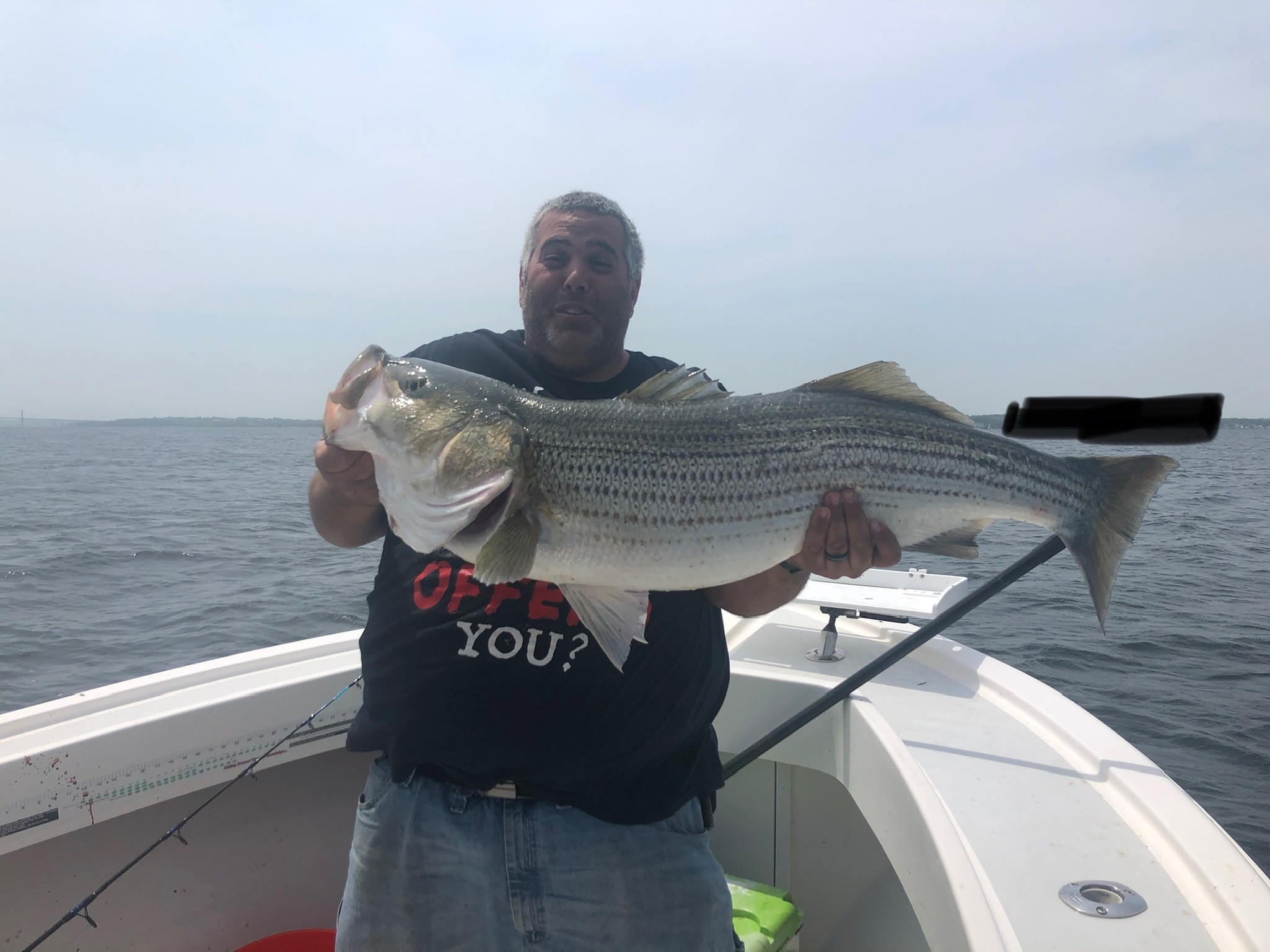
- Striped bass can weigh over 100 pounds, though it's rare to find one over 50 pounds. Females are generally larger than males. These fish have large mouths with jaws extending below the eye, and their bodies are blueish to dark olive with silver sides and bellies, featuring 7 or 8 distinctive stripes from head to tail.
- Biology and Habitat
- Most striped bass in Massachusetts originates from the Chesapeake Bay, Delaware River, and Hudson River. Young stripers typically don't migrate in their first two years. Tagging studies show that they migrate north in spring and summer, returning south in fall. Some from Chesapeake Bay migrate as far as the Bay of Fundy in Canada, while a few remain in Massachusetts during winter.
- Striped bass can live up to 40 years. Though they can exceed 100 pounds, fish over 50 pounds are uncommon. The Massachusetts record is a 73-pound catch from Nauset Beach in 1981.
- Females grow larger and most stripers over 30 pounds are female. Egg production is directly linked to size, with a 12-pound female producing about 850,000 eggs and a 55-pound female about 4.2 million. Males spawn at two to three years old, while females start at five or six. Spawning occurs in rivers and estuaries in spring to early summer, peaking around 65°F. Eggs drift in currents, hatching in 1.5 to 3 days. The highest mortality occurs shortly after hatching.
- Striped bass are typically found within a few miles of shore. Anglers catch them in river mouths, shallow bays, estuaries, and along rocky shores and sandy beaches. They are a schooling species, moving in small groups early in life, then in large schools as they mature.
- Diet
- Striped bass have a diverse diet, including fishlike alewives, flounder, and eels, as well as lobsters, crabs, clams, sea worms, and squid. They feed throughout the day and sometimes at night. Their abundance in Massachusetts waters during summer can significantly impact populations.